Fuensaldaña - provincia de Valladolid - M1 2026
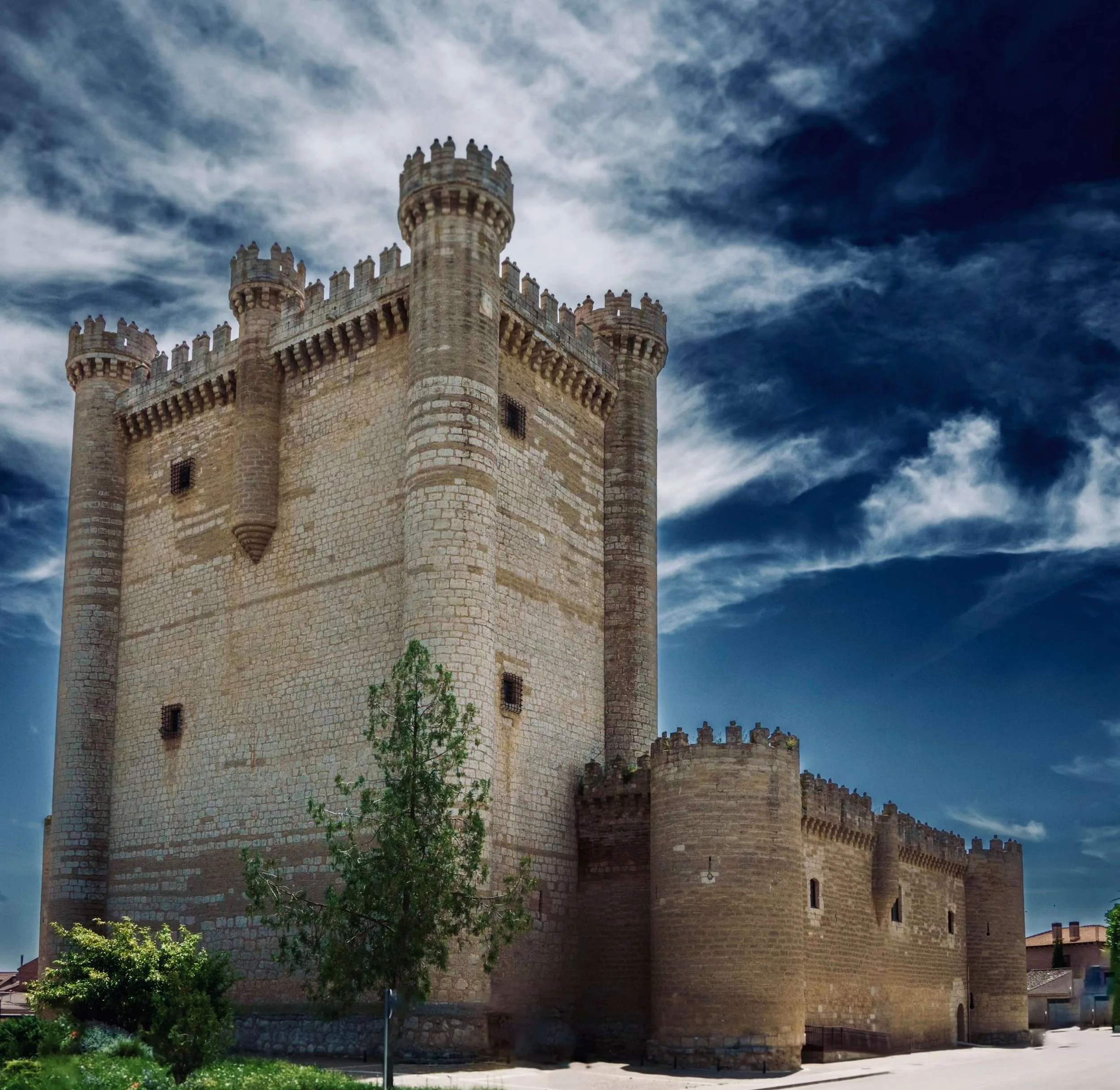
Fuensaldaña lies just north-west of Valladolid, on the edge of the city and within the wine-growing landscape of the Cigales region. Its traditional architecture is characteristically Castilian, with stone and brick houses, agricultural buildings and, particularly notably, underground wine cellars cut into the slopes around the village. The great landmark is the fifteenth-century Castillo de los Vivero, a substantial square stone castle with a tall tower of homage, while the Gothic-Mudéjar church of San Cipriano and the seventeenth-century convent of the Trinitarias add to the historic character of the village. The surrounding land is devoted to cereals and, above all, vineyards producing the wines of the Cigales DO. What distinguishes Fuensaldaña from many nearby agricultural villages is this combination of a powerful medieval castle and a long-established wine-making tradition, with its network of historic bodegas still closely tied to the landscape and local identity.
By the time we reached Fuensaldaña, we were suffering from a definite case of castle fatigue, having followed a substantial part of the “Ruta de los Castillos” through Tierra de Campos. The castle itself is certainly impressive, a fine example of the fifteenth-century castles of the so-called School of Valladolid, but it proved surprisingly difficult to photograph. Cars, street furniture and the surrounding buildings made it hard to find a clean view, particularly from close up. We persevered and managed to get one photograph that we were reasonably happy with, but, by then, our enthusiasm for exploring the town had rather run out. We didn’t see much else of Fuensaldaña before moving on.
Castillo de los Viveros